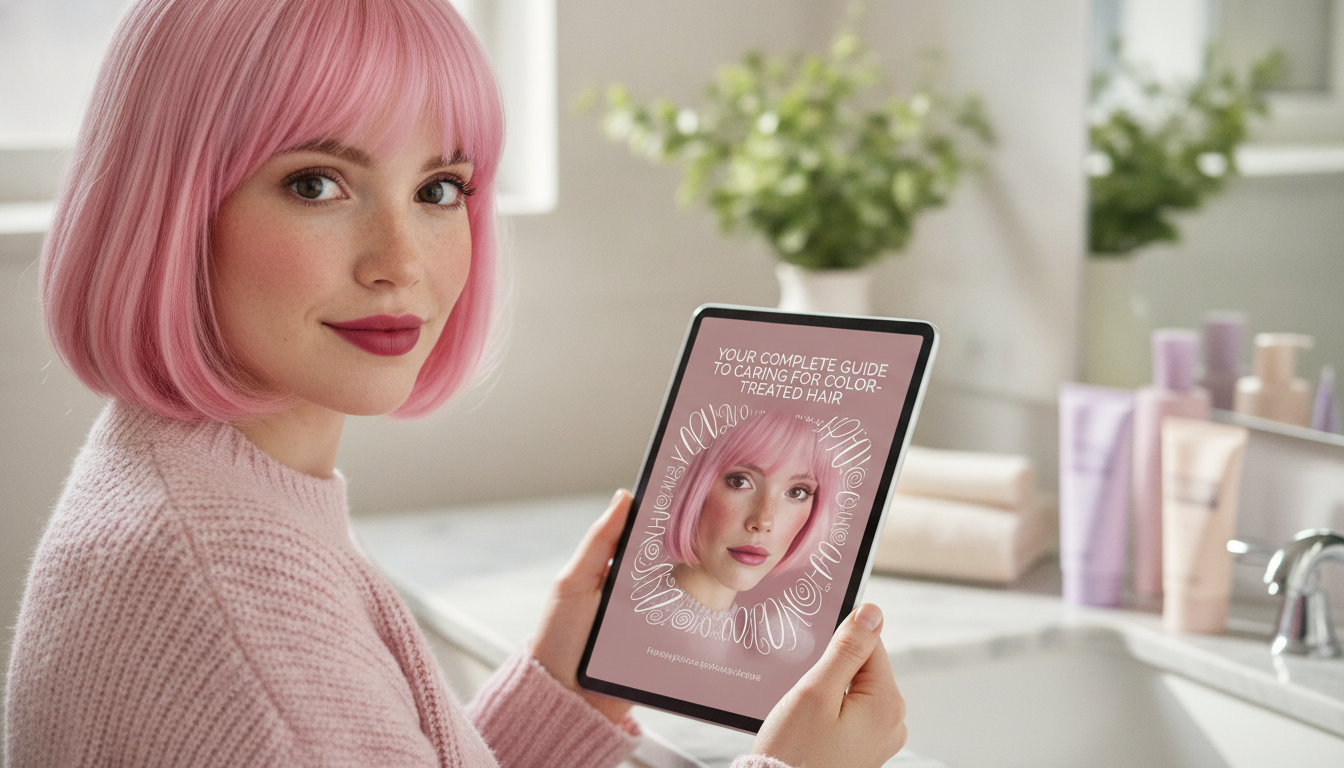
Color can completely change the vibe of your hair—but it also changes how your strands behave day to day. After coloring, hair often holds moisture differently, reacts faster to heat, and fades more easily from washing, sun, and styling. A steady routine built around gentle cleansing, targeted conditioning, and smart protection helps your color stay fresher longer while keeping hair soft, shiny, and resilient. For more guidance, see The Ultimate Guide to Caring for Color-Treated Hair.
Whether you went darker, brighter, or lighter, chemical processing can alter the outer layer of the hair (the cuticle) and the inner structure. That’s why “my usual routine” may suddenly feel too drying or not conditioning enough.
Consistency beats complexity. Use this routine as a baseline and adjust based on how quickly your roots get oily and how dry your ends feel.
If you heat-style often, keep tools small and controlled to avoid repeated passes over the same section. For quick touch-ups and tighter waves, the Mini Hair Curler Pencil Rod can be a practical option—just pair it with a protectant and avoid turning the temperature higher than necessary.
Start by picking your main goal—fade control, repair, curl definition, volume, or scalp comfort—then build a simple lineup around it.
| Product type | Best for | Use frequency | Helpful ingredients/notes |
|---|---|---|---|
| Color-safe shampoo | Reducing fading while cleansing | Each wash | Milder surfactants; moisturizing agents; avoid harsh daily clarifiers |
| Conditioner | Softness, detangling, cuticle smoothing | Each wash | Fatty alcohols, silicones (optional), humectants, lightweight oils |
| Repair treatment | Breakage-prone, chemically stressed hair | 1× weekly or as needed | Bond-building actives; balanced protein + moisture |
| Hair mask | Dryness, frizz, high porosity | 1× weekly (up to 2×) | Butters, oils, ceramides, cationic conditioning agents |
| Leave-in + heat protectant | Heat styling, detangling, daily protection | After each wash | Film formers, UV filters, silicones (optional), panthenol |
| Clarifying shampoo | Hard water, heavy styling buildup, dullness | Every 2–4 weeks | Use sparingly; always follow with deep conditioning |
For an easy, step-by-step routine you can follow and adjust by hair type, keep the basics in one place with Your Complete Guide to Caring for Color-Treated Hair (eBook).
Fewer washes per week usually helps slow fading, especially if you use lukewarm water and a gentle cleanser. On off-days, try dry shampoo or a rinse-only day to refresh without stripping color.
They’re not mandatory, but many people find gentler cleansers help reduce dryness and fading. Formulation matters most—choose a shampoo that cleans well without leaving hair squeaky, rough, or overly dry.
Typically the order is shampoo → hair mask → (optional) conditioner for extra slip, especially on tangly or coarse hair. Fine hair often does best using a mask just on ends or replacing conditioner with a short mask session.








Leave a comment