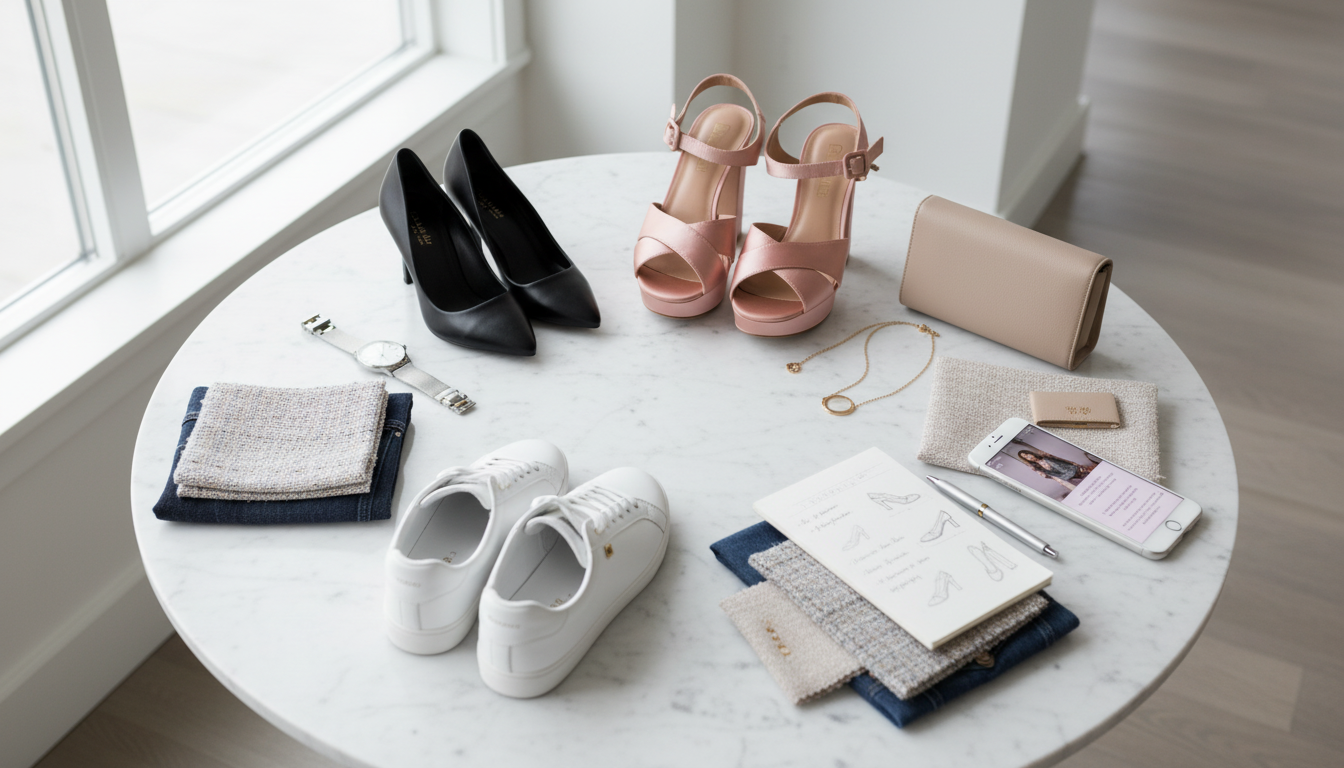
Start by deciding what you want your shoes to do for the look: blend in for a clean, polished vibe or stand out as the statement piece. From there, match shoes to your outfit using three quick checks—occasion, color, and proportion—so everything feels intentional instead of random.
Dressy outfits look best with refined shapes (sleek loafers, pointed-toe flats, heeled boots, minimal sneakers). Casual outfits can handle chunkier soles, canvas textures, sporty details, or sandals. When in doubt, go slightly dressier than your outfit—especially for dinners, dates, or events.
Pick one of these approaches: (a) match your shoes to one color already in your outfit (top, bag, belt, or print), (b) choose a neutral that works with most palettes (black, white, nude, tan, gray, metallic), or (c) use shoes as the “pop” and keep the rest quiet. If your outfit has strong contrast, mirror it—black-and-white looks great with either crisp white sneakers or black boots.
Chunky shoes (platforms, lug boots, dad sneakers) pair well with wide-leg pants, longer hems, and oversized silhouettes. Sleek shoes (strappy sandals, slim boots, pointed flats) complement tailored pieces, midi skirts, and cropped hems. If your outfit already has volume, choose a cleaner shoe; if the outfit is minimal, you can add interest with texture or a bold shape.
Leather and suede read elevated; canvas and knit read casual. Echo metals: gold jewelry looks cohesive with warm-toned shoes or gold hardware; silver jewelry pairs naturally with cool-toned shoes and silver buckles. For prints, pull one shade from the pattern or go neutral to avoid competing focal points.
For more examples and outfit pairings, visit How to Find Shoes That Match an Outfit.
Black, white, nude (close to your skin tone), and tan are the most versatile everyday options. Metallics like gold or silver can also act like neutrals with many outfits.













Leave a comment