
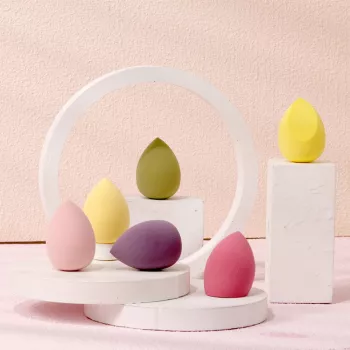
Those makeup sponges are most commonly called beauty blenders (a popular brand name) or simply makeup sponges. You may also hear them called blending sponges or foundation sponges, since they’re designed to press liquid or cream products into the skin for a smoother, more natural-looking finish.
“Beauty Blender” is a brand that became so well-known the name is often used for the category, like calling tissues “Kleenex.” A makeup sponge can be any similar sponge applicator—often the same teardrop shape—with different materials, densities, and finishes. Many non-brand sponges perform just as well, especially when used correctly.
The rounded side covers larger areas like cheeks and forehead quickly, while the pointed tip helps reach tight spots around the nose, under the eyes, and along the hairline. This shape makes it easier to blend without harsh edges or streaks.
Most people get the best results by dampening the sponge first, then squeezing out excess water. Use a bouncing or pressing motion (not dragging) to apply and blend foundation, concealer, cream blush, or contour. A damp sponge helps keep coverage even and can prevent a cakey look.
If you’re choosing sponges or figuring out which shapes to use for different steps, check out this guide: 4-Piece Makeup Sponge Set Guide for Smooth, Streak-Free Foundation.
For What Are Makeup Sponges Called? Beauty Blender vs Sponge, the best answer depends on fit, material, care instructions, and how the product will be used day to day.
Checking those details first helps avoid a poor match and keeps the choice practical after delivery.
Replace it about every 1–3 months, depending on use and how well it’s cleaned. If it starts tearing, stays stained, smells off, or won’t rinse clean, it’s time for a new one.









Leave a comment